


BE INSPIRED | FEATURE 12 NORIS OBIJIAKU

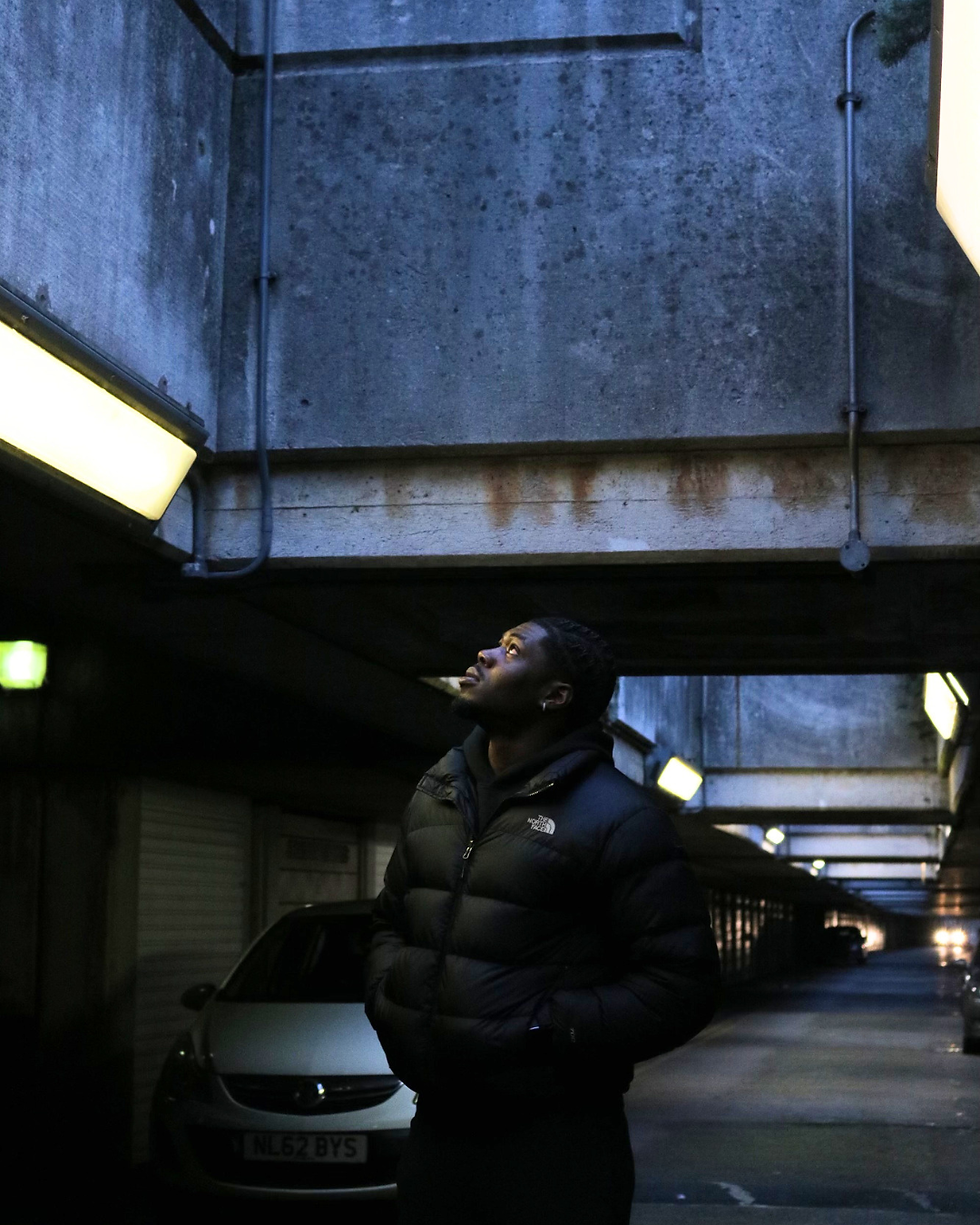
We're excited to share our latest feature - this time spotlighting Architectural Designer and Content Creator Noris Obijiaku.
Noris’s career spans beyond traditional practice. His journey moves between architectural practice, media and public education, shaped by curiosity, humour and a belief that architecture should be open to everyone. In this conversation, he reflects on growing up between Italy and South London, showing up authentically as a Black British man in the profession, and why you don’t need every credential before putting your voice out there.
Through TheDesignsSuite, his short-form films and his Master’s thesis Civic Living, Noris demonstrates how clear storytelling can break down gatekeeping and help people feel proud of where they live again.

WHO IS NORIS?
Tell us about yourself, who you are, your ethnic background and what you do.
My name is Noris Obijiaku. I’d describe myself as someone that wants to serve and add value and positivity in people’s lives. I am also an architecture graduate, designer and content creator. I recently completed my Master of Architecture, following previous experience in practice as a Part 1 Architectural Assistant. Alongside pursuing my career in architecture, I am the founder of TheDesignsSuite, a media platform where I use short-form video, storytelling and humour to make architecture easier to understand.
My work sits between architectural practice, media and public education. I create content about buildings, housing, technology, student life and the realities of becoming an architect. I am interested in the parts of architecture that affect people every day: how a home makes someone feel, why a neighbourhood works, who gets included in design decisions and how policy eventually becomes a real place.
My Master's thesis, Civic Living, explored how existing housing estates could be restored and adapted rather than demolished. The central question was simple: How can architecture help people feel proud of where they live again? That question also describes much of what I want to do through TheDesignsSuite. I want to build a serious career in the profession while helping architecture feel more open, relevant and accessible to the public.
FROM ITALY TO SOUTH LONDON
What experiences growing up made you realise buildings and places could have such a profound impact on people's lives?
I was born in Italy and I spent the majority of my years in a communal environment where everything was shared. Then I moved to South London in 2011, and after some time, I became aware of how differently places can make you feel, even when they are only a few streets apart. Some spaces feel welcoming and cared for. Others communicate the opposite through poor maintenance, limited light, difficult layouts or a lack of places where people can gather. Before I knew the language of architecture, I could still feel those differences.
Studying architecture gave me a way to understand what I had been noticing. Buildings do more than provide shelter. They can affect safety, dignity, health, belonging and how much pride people feel in their community. I became especially interested in housing because the home is where architectural decisions become deeply personal.
That thinking led to my Master's thesis, Civic Living. Instead of accepting demolition as the automatic answer for an existing estate, I explored what could happen if we repaired, adapted and invested in what was already there. I worked across the scale of the neighbourhood, the building and the home, looking at how design could support everyday life and help residents feel valued. The project confirmed something I had sensed growing up: the condition of a place can quietly tell people what society thinks they deserve. Architecture has a responsibility to send a better message.


SHOWING UP AS YOURSELF
We love how authentically you show up in your content. As a Black British male, what has your experience been of showing up authentically as yourself in other contexts, such as education and work?
In education and work, there have been moments when I have been very aware of being one of the few Black men in the room. That can create a quiet pressure to monitor how you speak, dress or express an opinion because you do not want to be misunderstood or judged before your work is considered. Architecture already has strong ideas about what a professional is meant to sound and look like, so it can be easy to make yourself smaller to fit that image.
Over time, I have become more comfortable bringing my full personality into those spaces. For me, authenticity does not mean ignoring the context or refusing to be professional. It means I can be thoughtful and serious about architecture without removing my humour, my South London voice or the interests that make me who I am.
Creating content helped with that confidence because it showed me that people responded to clarity and honesty. I did not need to imitate the traditional image of an architect to be useful. I could explain a building in the way I would naturally explain it to a friend and still respect the subject. I now try to carry that confidence into professional and academic settings. I want younger people who see my work to understand that entering the profession should expand who they are, rather than require them to erase themselves.
TAKING ARCHITECTURE BEYOND THE STUDIO
Where did the decision come from to take architecture beyond the studio and into digital storytelling?
The decision grew out of sharing my own journey through architecture school. I realised that the conversations happening in studios were often relevant to the public, but the way we spoke about them made them feel closed off. People care about whether their home has enough light, why housing is unaffordable, why a public space feels unsafe or why a building looks the way it does. They may not use architectural language, but they are already experiencing architecture every day.
Short-form video gave me a way to close that gap. I could visit a building, explain one clear idea, use humour and invite people into the conversation without expecting them to have studied the subject. TheDesignsSuite developed from that approach. What began as me documenting student life became a wider platform for building reviews, housing stories, technology advice and honest conversations about the profession.
I also saw digital storytelling as a form of architectural practice in its own right. Design affects the public, so communicating design should not be limited to architects, clients and planning documents. If someone watches one of my videos and notices natural light differently, understands a housing policy or feels confident enough to ask a better question about their neighbourhood, that communication has practical value.

BEYOND TELETUBBYLAND
What is your favourite, or most proudly produced piece of content, and why? Tell us about it and the process of creating it.
One piece I am particularly proud of is my video on BedZED, the sustainable housing development in South London. From a distance, it is easy to present the scheme as a colourful piece of eco-architecture, sometimes jokingly compared to Teletubbyland. I wanted to go beyond its appearance and ask what the project was trying to achieve, what worked and what residents have experienced over time.
I began by researching its original environmental ambitions, including its approach to energy, transport, shared spaces and lower-impact living. On site, I filmed my first reactions and the details that made those ideas visible. I also spoke with a resident, who raised concerns about maintenance, unreliable systems and costs being passed on to people living there. That conversation changed the final voice-over. I checked the wider context and made room for the gap between the project's ambition and its performance in use.
I am proud of the video because it reflects the kind of storyteller I want to become. It is curious without being uncritical, and accessible without flattening the complexity. The process also reminded me that buildings should not only be judged through launch images or awards. The people living with the design every day often understand its successes and failures most clearly.
WHY SHOULD ANYONE CARE?
What does creating architectural content allow you to explore or communicate that traditional architectural education and practice sometimes struggles to?
Creating content lets me begin with the public experience of architecture. In education and practice, a lot of communication is necessarily aimed at tutors, consultants, clients or planning authorities. That can make the conversation technical and inward-facing. On social media, the first question is different: why should somebody who is not an architect care about this?
That question pushes me to talk about light, comfort, maintenance, money, identity and how a place feels to use. It also allows me to connect buildings to the wider systems behind them, such as housing policy, development, sustainability and public investment. A short video can move between history, a physical detail and a resident's experience in a way that feels immediate. Viewers can then respond with their own memories or challenge the way I have framed the story.
Content also gives me permission to use humour and everyday comparisons. Those tools can make an unfamiliar idea easier to enter without treating the audience as if they are less intelligent. I do not see digital storytelling as a replacement for architectural education or professional practice. It is a public layer that both can sometimes miss. It helps translate the knowledge inside the profession and brings public questions back into the conversation.
LEAD WITH THE CONSEQUENCE
There's often a lot of language barrier and gatekeeping around architecture. When you create content, how do you decide what stories or ideas are worth bringing to a wider audience, and how do you make complex architectural ideas feel relevant to everyday life?
I usually start with a simple test: can I explain why this matters before I explain the architectural term? A story is worth bringing to a wider audience when it affects how people live, reveals a decision they would not normally see or changes the way they might read a familiar place. That could be the orientation of a home, the decline of social housing, the design of a prison or why a public building divides opinion.
To make the idea relevant, I lead with the consequence. Instead of starting with jargon about massing or permeability, I might begin with why a flat feels dark or why a route through an estate feels welcoming. Once the audience understands the human effect, I can introduce the architectural idea behind it. On-site footage, diagrams, comparisons and humour help people see the point rather than simply hear a definition.
I also try to be honest about complexity. Making something accessible should not mean pretending there is one easy answer. If there are competing views, costs or failures, I want those to be visible. My aim is for someone to leave a video one percent more informed and confident enough to join the discussion. Architecture becomes less gatekept when people are given useful language, clear examples and permission to have an opinion about the places shaping their lives.
YOU DON’T NEED EVERY CREDENTIAL
Was there a point in your own journey when you had to overcome that feeling of needing credentials before putting your voice out there?
When I began creating architectural content, I was still a student. It was easy to feel that I should wait until I had finished every stage of qualification, gained more experience or received permission from someone more established. Architecture has a long training process, so there is always another credential that can make you feel as if your voice should come later.
I eventually realised that waiting to know everything would mean never starting. I did have something useful to share: the experience of learning, working in practice, visiting buildings and asking the questions that other students and members of the public were also asking. The important thing was to be clear about the position I was speaking from. I do my research, distinguish fact from opinion and avoid presenting myself as the final authority.
Publishing consistently built the confidence that I was waiting to feel beforehand. Each video improved my research, writing and delivery, and the audience's responses showed me where an explanation was useful or unclear. A phrase I return to is doing things before you think you are ready. For me, that does not mean being careless. It means preparing properly, being honest about what you know and allowing the work itself to help you grow.

CONFIDENCE COMES AFTER YOU BEGIN
What would you say to young aspiring architects from ethnic minority backgrounds who don't feel confident enough to put themselves out there the way you do?
I would tell them that confidence often arrives after you begin, not before. You do not need to start by presenting yourself as an expert. Start by documenting what you are learning, sharing a drawing, explaining a building you like or asking a thoughtful question. Small, consistent actions give you evidence that your voice can improve and add value.
Your background is not something you have to overcome before you can contribute. It gives you experiences, references and questions that the profession needs. There may be rooms where you do not see many people who look or sound like you, but that absence is not proof that you do not belong there. It may be evidence that your presence matters.
I would also encourage them to find community. Speak to students a year ahead, contact people whose work you respect and build with peers who understand the journey. Putting yourself out there does not have to mean becoming a content creator or sharing every part of your life. It can mean applying for the opportunity, asking the question in a review or showing someone your portfolio before you think it is perfect. Prepare seriously, stay curious and allow yourself to be seen while you are still developing. That is how most of us grow.
TWO PATHS, ONE PURPOSE
Looking ahead, where do you see yourself in the next five years?
In the next five years, I see myself building two connected paths: progressing in architectural practice and growing TheDesignsSuite into a recognised UK platform for architecture, design and public education. Practice matters to me because I want to keep developing the technical judgement and real project experience behind what I communicate. I am especially interested in housing and work that improves everyday life.
At the same time, I want TheDesignsSuite to develop beyond individual social posts into a media and education company. I would like to present longer-form films and series, work with organisations that influence the built environment and create opportunities for young people to engage with architecture in a way that feels current and welcoming. I am also exploring a digital learning product for architecture students, built around short questions that sharpen practical knowledge across the Part 1 to Part 3 journey.
The long-term aim is to be known as an architect and communicator who can move between the profession and the public without weakening either side. I want to help shape places, but also shape the conversation around who architecture is for, how it is understood and who feels able to take part in it.


Comments